Lifting & Rigging2 min read
Webbing Sling Hitch Types, Capacity and Edge Protection Explained
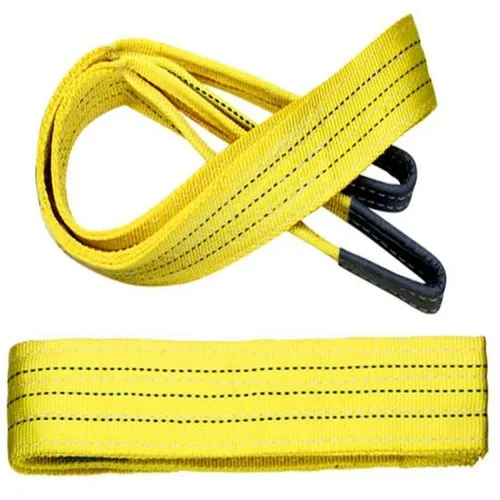
A webbing sling does not have one fixed capacity. The hitch, the angle and the edges it touches all change what it can safely lift.

At a glance
4 key points- 01
Capacity depends on the hitch: vertical, choke or basket.
- 02
Choke hitches reduce capacity; always use the rating for the hitch applied.
- 03
Sharp edges can cut webbing under load — always protect them.
- 04
Discard any sling with a missing label, cuts, burns or broken stitching.
01Why webbing slings are so widely used
Flat webbing slings are light, flexible and soft. Their wide contact area spreads pressure, which protects machined, painted and delicate surfaces that chain or wire rope could mark.
That softness is also their main vulnerability: synthetic webbing is easily damaged by sharp edges, heat and some chemicals.
02The three basic hitches
| Hitch | How it is rigged | Effect on capacity |
|---|---|---|
| Vertical | Single sling straight from hook to load | Reference rating for the sling |
| Choke | Sling wrapped around load and passed through its own eye | Reduced compared with vertical |
| Basket | Sling passed under the load, both eyes on the hook | Can increase capacity at suitable leg angles |
03Edge protection is not optional
Under load, webbing pressed against a sharp or even moderately square edge can be cut through. Protective sleeves, edge guards or corner pads should be used wherever the sling contacts an edge.
- Use wear sleeves on abrasive or rough surfaces.
- Use corner protectors on steel sections and plates.
- Never drag a sling from under a resting load.
- Keep slings away from heat sources and incompatible chemicals.
04Inspection and discard criteria
- Label missing or illegible.
- Cuts, tears or holes in the webbing.
- Abrasion that exposes core yarns.
- Heat damage, melting or charring.
- Chemical damage or discolouration.
- Broken or worn stitching, or knots in the sling.
If any of these are found, withdraw the sling from service. A sling without a legible label has an unknown capacity and must not be used.
Questions & answers
Frequently Asked Questions
Does a choke hitch reduce webbing sling capacity?
Yes. A choke hitch carries less than the same sling in a vertical hitch. Use the choke-hitch rating marked on the sling label.
Can a webbing sling be used on sharp edges?
Only with suitable edge protection. Unprotected edges can cut webbing under load, causing sudden failure.
How often should webbing slings be inspected?
Inspect before every use, and arrange periodic thorough examinations as required by the regulations and standards that apply to your site.
What is the difference between eye-eye and endless webbing slings?
Eye-eye slings have reinforced eyes at both ends. Endless slings are a continuous loop, which allows wear points to be rotated between lifts.