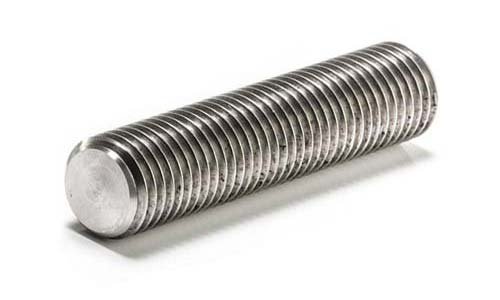
Fully threaded stud
Threaded end to end; the usual choice for flange bolting with two nuts.

 LF — 05
Fully threaded and double-end studs for flange, equipment and structural connection requirements.
Key attributes
Quick answer
A stud is a headless fastener threaded along its full length or at both ends. It is either screwed into a tapped hole with a nut on the free end, or used with a nut on each end — the common arrangement for bolting pipe flanges together.
Also known asStud bolt · Fully threaded stud · Double-end stud · Threaded rod stud
Studs are preferred wherever a joint is opened repeatedly or a bolt head would be impractical. On flanges, a fully threaded stud with two nuts lets the joint be tightened from either side; on equipment, a double-end stud fixed into a tapped casting protects the parent thread during maintenance.
Because studs often sit in pressure, temperature or structural joints, their material and dimensions should follow the governing drawing or specification. List each size with quantities, and state any nut, washer or coating requirement.
Threaded end to end; the usual choice for flange bolting with two nuts.
Threaded at both ends with a plain centre; one end often screws into a tapped hole.
Supplied as a set with two nuts per stud for ready installation.
Threaded bar cut to required lengths for supports and anchoring.
Length should cover both flanges, gasket, nuts and the required thread protrusion beyond each nut.
Pressure, temperature and corrosion conditions decide the material; follow the project specification.
Confirm metric or inch threads and coarse or fine pitch to match nuts and tapped holes.
Outdoor and process service may call for a protective coating to keep nuts free for removal.
Both clamp a joint; the difference is where the tightening happens and how the joint is maintained.
| Criteria | Stud | Bolt |
|---|---|---|
| Head | No head | Integral head |
| Tightening | Nut on one or both ends | Head and nut, or into a tapped hole |
| Typical use | Flanges, casings, frequently opened joints | General assembly and fabrication |
| Thread protection | Protects tapped holes in castings | Repeated removal wears tapped holes |
Related products

Fasteners & Fittings
Threaded flange connection for industrial piping layouts and removable joint arrangements.

Fasteners & Fittings
Industrial fitting formats for joining, directing and adapting pipework requirements.
Fasteners & Fittings
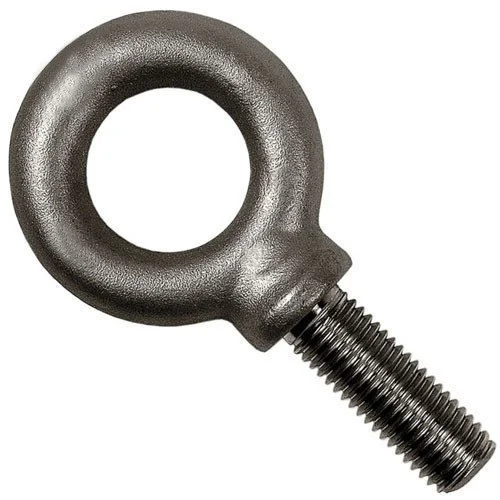
Mild-steel threaded eye connection for industrial anchoring, suspension and handling enquiries.
Request a quote
Share your application and technical details. Your enquiry will be emailed to our team for review.