D (chain) shackle
Narrow D-shaped body for single, in-line connections.

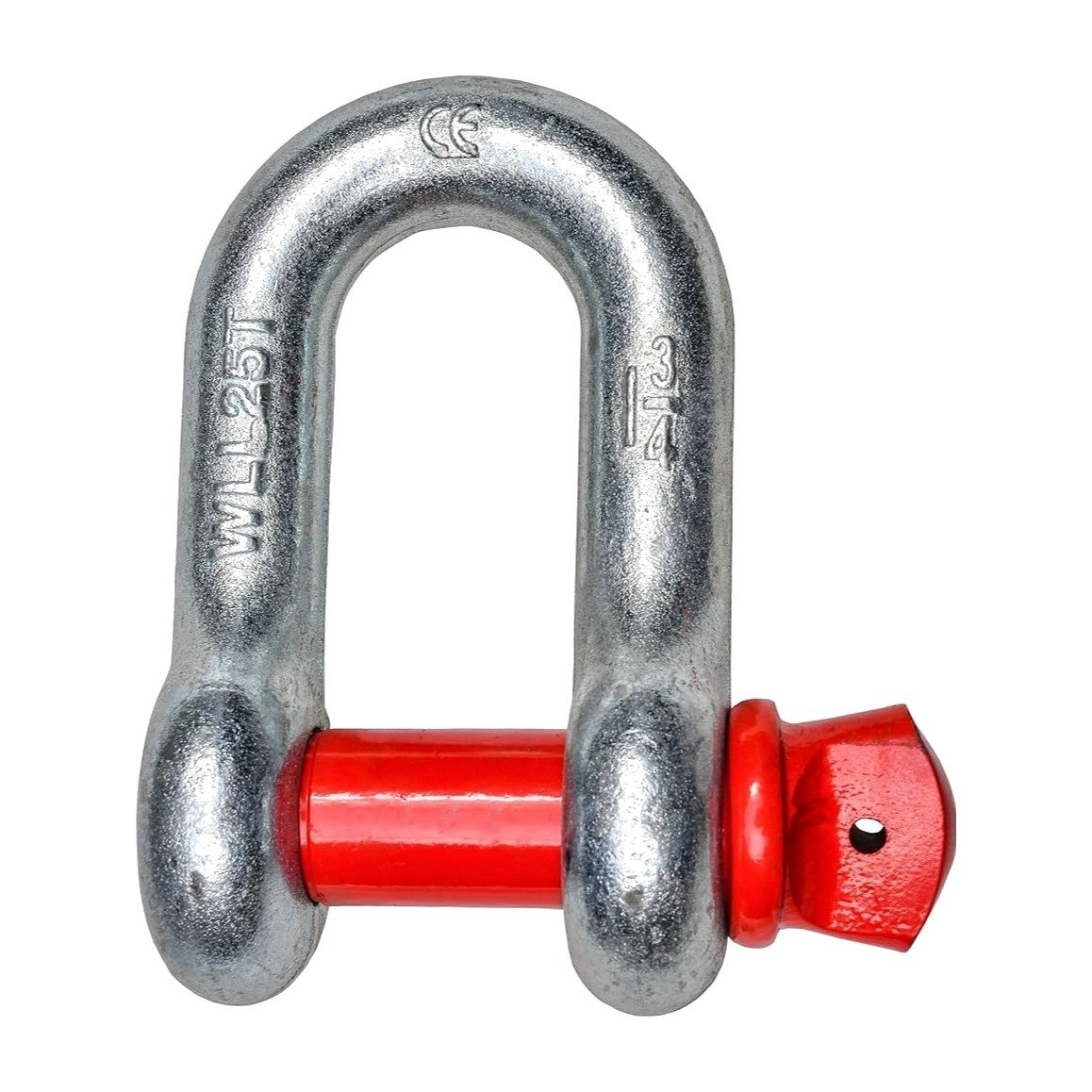 LF — 09
Pin-connected shackles for removable links within lifting, rigging and material-handling assemblies.
Key attributes
Quick answer
A shackle is a U-shaped metal body closed by a removable pin, used to connect slings, chains, wire rope, hooks and lifting points. D shackles suit straight in-line loads, while bow shackles have a rounder body that accepts multiple slings or angled loads.
Also known asD shackle · Bow shackle · Anchor shackle · Rigging shackle
Shackles are the removable links of a rigging system. They connect a sling to a lifting lug, a hook to a chain, or several legs to a single point, and the pin can be removed to install or dismantle the arrangement.
Choosing a shackle means choosing a body form, a pin type and a rated capacity. The rating, standard and documentation for lifting use must be confirmed against your requirement, and the shackle must be used within that rating and its loading geometry.
Narrow D-shaped body for single, in-line connections.
Larger rounded bow for multiple slings or side loading within limits.
Threaded pin for quick fitting in temporary rigging.
Bolt, nut and split pin for long-term or rotating-load installations.
Select by the required rated capacity, never by size alone. Confirm WLL and the governing standard.
Side loading and multi-leg angles reduce effective capacity; bow shackles handle these better than D shackles.
Screw pins can loosen if the load rotates the pin; bolt-type pins with cotters suit long-term rigging.
Lifting shackles should carry identification and rating marks with traceable documents.
Lifting and load-bearing products must be selected against a confirmed working load limit, the applicable standard and the actual rigging arrangement. Never use a part beyond its marked or documented rating, and inspect before every use.
Body shape decides how the shackle can be loaded.
| Criteria | D (chain) shackle | Bow (anchor) shackle |
|---|---|---|
| Body shape | Narrow D profile | Larger rounded bow |
| Best for | Single, in-line loads | Multiple slings or angled loads |
| Side loading | Not intended for side loads | Better tolerance within rated limits |
| Typical use | Chain and single-sling connections | Multi-leg slings, wide webbing slings |
Related products

Lifting & Material Handling
Oblong master-link style ring for multi-leg sling and connection arrangements.

Lifting & Material Handling
Rotating lifting hook with latch for applications requiring orientation at the connection point.

Lifting & Material Handling
Heavy-duty hook format used as the load connection within crane and block arrangements.
Request a quote
Share your application and technical details. Your enquiry will be emailed to our team for review.