Geometry & Tolerance
Head form, shank, eye, bend, hole, shoulder and critical dimensions define how the component must be formed and finished.


A requirement-led route for Lohar Industrial Fasteners, connection products and lifting or material-handling hardware.

Manufacturing approach
A general name identifies the category. The manufacturing brief explains what the actual component must be.
Dimensions, material, grade, thread, finish and intended application can influence the production route. Bringing those details together early reduces assumptions and gives production, inspection and commercial teams the same reference.
Indicative production route
The exact sequence depends on the component and agreed specification. This route shows how the essential manufacturing decisions stay connected from enquiry review through final supply.
Component form, dimensions, material or grade, thread, finish, quantity, application and documentation needs are brought into one working brief.
The confirmed component and production route guide material selection, stock preparation and the planned starting size.
Where forging is required, prepared material is heated and shaped toward the component geometry using the suitable forming sequence.
Excess material and forging scale are addressed so the part is ready for the operations that follow.
Critical faces, holes, shanks and threads are produced according to the confirmed drawing or technical requirement.
Heat treatment, surface preparation or protective finish is considered where the material, grade and service conditions require it.
Agreed dimensions, thread details, visible finish and order documentation are reviewed before packing and dispatch.
What changes the route?
A standard catalogue label does not capture every engineering decision. These inputs help determine which operations, checks and supply controls belong in the route.
Head form, shank, eye, bend, hole, shoulder and critical dimensions define how the component must be formed and finished.
Material selection influences forming behaviour, strength expectations, treatment needs and the suitable surface route.
Thread form, pitch, engagement length and mating component must be clear before threading and inspection are planned.
Indoor, outdoor, coastal or process conditions can change the surface-protection and documentation conversation.
Prototype, small-batch and repeat requirements can call for different planning, tooling and reference-control decisions.
Required reports, certificates and inspection stages should be identified before the supply scope is agreed.

Process control
Inspection is most useful when it is connected to the requirement. The relevant checkpoints are identified from the drawing, technical specification and documents agreed for the order.
Material and grade details remain connected to the order scope.
Critical geometry and tolerances are reviewed at the appropriate stage.
Thread details and mating interfaces are checked against the confirmed reference.
Visible finish, marking, packing and agreed documents are reviewed before dispatch.
Manufacturing questions
Useful answers for standard and drawing-led industrial manufacturing enquiries.
Share the drawing or reference, dimensions and tolerances, material or grade, thread specification, finish, quantity, application, delivery destination and any inspection or document requirements.
Yes. A controlled drawing, sample or complete dimensional reference can be used to begin a feasibility and supply discussion for a requirement-specific component.
No. Geometry, material, strength requirement, thread, quantity and finish can change the production sequence. The applicable route should be confirmed during technical review.
The current range includes eye bolts, nut bolts, studs, threaded flanges, pipe fittings, rings, shackles, hooks, lifting clamps, webbing slings, bottom blocks and wire-rope pulleys.
Include the exact size, pitch, thread form, coating or surface-finish requirement in the enquiry. Availability and manufacturing feasibility can then be reviewed against the order scope.
State every required certificate, report, test or inspection document at the enquiry stage so its availability and scope can be clarified before the order is confirmed.
Ready to discuss production?
Send the drawing, sample reference or available dimensions with material, thread, finish, quantity and delivery requirements.
Selected products
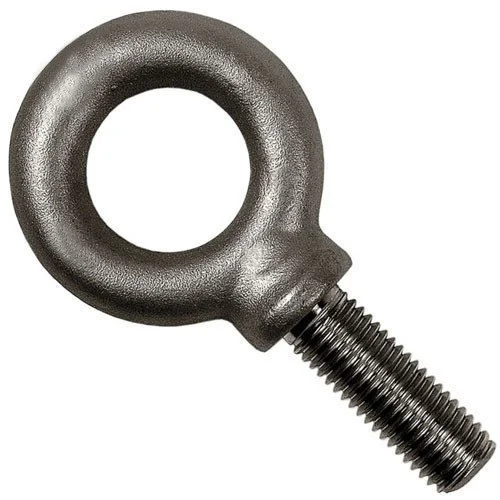
Fasteners & Fittings
Mild-steel threaded eye connection for industrial anchoring, suspension and handling enquiries.
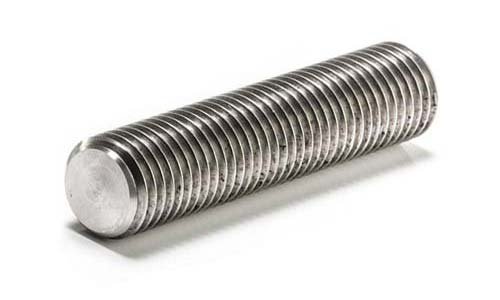
Fasteners & Fittings
Fully threaded stud format for equipment, flange and structural connection requirements.

Fasteners & Fittings
Threaded flange connection for industrial piping layouts and removable joint arrangements.

Lifting & Material Handling
Hook-and-sheave bottom block assembly for guided industrial lifting arrangements.
Request a quote
Share your application and technical details. Your enquiry will be emailed to our team for review.